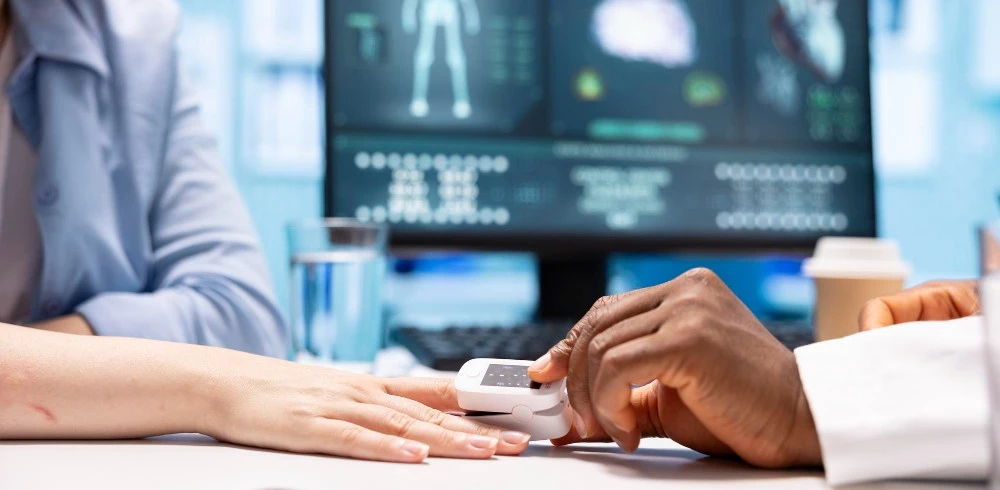
Medical Surveillance
Get in touchAt Medical Surveillance, we provide specialist health monitoring services designed to protect employees exposed to workplace hazards and to help employers meet their legal responsibilities.
Medical surveillance involves carrying out structured health checks for workers who are at risk of illnesses caused by exposure to hazardous substances, noise, vibration, radiation, or other workplace risks.
It is a legal requirement under UK regulations such as the Control of Substances Hazardous to Health (COSHH) Regulations 2002), the Control of Lead at Work Regulations 2002, and the Ionising Radiations Regulations 2017 (IRR17).
By providing timely health checks and keeping accurate records, medical surveillance ensures both employee protection and employer compliance.
Contact us now to get a free quote and schedule a professional medical surveillance for your team.
Why Is Medical Surveillance Important?
Medical surveillance plays a critical role in preventing occupational illnesses by identifying early signs of health problems.
Many workplace-related conditions, such as occupational asthma, dermatitis, hearing loss, or vibration-related injuries, develop gradually and may go unnoticed until they become severe.
Surveillance ensures these issues are detected early, allowing intervention to protect workers’ long-term health.
For employers, it provides reassurance that they are meeting legal requirements and safeguarding their workforce.
What Does Medical Surveillance Involve?
Medical surveillance includes a combination of health questionnaires, physical examinations, biological monitoring (such as blood or urine testing), lung function checks, hearing tests, skin inspections, and vision assessments, depending on workplace risks.
Baseline checks are carried out before an employee begins work, followed by regular reviews to track changes over time.
Where concerns are identified, workers are referred to occupational health physicians for further medical investigation.
How Often Should Medical Surveillance Be Conducted?
The frequency of surveillance depends on the risk level identified in the workplace.
For example, workers exposed to asbestos or lead may require annual medicals, while those exposed to noise or vibration may need periodic hearing or hand-arm vibration assessments.
In most cases, annual checks are standard, but higher-risk industries may require more frequent monitoring.
Employers must base surveillance frequency on their workplace risk assessments.
What Are the Benefits of Medical Surveillance?
The key benefit is that it detects early health risks, protects employee wellbeing, and helps employers comply with UK workplace health and safety regulations.
Key benefits include:
Detects early signs of occupational illness before they become severe.
Protects workers from long-term health damage.
Ensures compliance with COSHH, IRR17, and other legal requirements.
Reduces sickness absence and compensation claims.
Demonstrates employer duty of care and commitment to staff wellbeing.
What Symptoms Do Technicians and Health Professionals Monitor?
Surveillance focuses on risks specific to each workplace.
For respiratory hazards such as silica or flour dust, lung function and breathing symptoms are monitored.
For skin hazards like oils or cleaning agents, technicians check for dermatitis.
Workers exposed to noise undergo audiometry to detect early hearing loss, while those exposed to vibration are checked for circulation or nerve problems.
Our tailored approach ensures risks are monitored effectively.
Is Medical Surveillance a Legal Requirement?
Medical surveillance is mandatory in workplaces where exposure to hazardous substances or risks can cause serious health issues.
We include industries such as construction, manufacturing, healthcare, laboratories, food production, and energy.
Employers are required to provide surveillance when employees are at risk of conditions such as occupational asthma, dermatitis, cancer, hearing loss, or radiation-related illness.
Health records must be retained for at least 40 years due to the long latency of many occupational diseases.
What Is the Cost of Medical Surveillance?
The cost of medical surveillance is from £50 to £80 per employee.
More detailed programmes involving audiometry, spirometry, biological monitoring, or medical examinations by occupational health physicians typically range from £100 to £200+ per employee.
The cost of medical assessments depends on the workforce size, industry type, and level of testing required.
Larger employers often benefit from tailored packages that reduce per-person costs.
Compared with the financial risks of enforcement action, staff absence, or compensation claims, medical tests are a cost-effective investment.
What Happens If Abnormal Results Are Found?
If medical abnormalities are identified during medical surveillance, the case is escalated to an occupational health physician for further review.
Depending on the findings, the employee may be referred for specialist tests, removed temporarily from high-risk work, or provided with tailored support.
Employers are required to act on medical advice, which may include reviewing workplace controls and adjusting duties. This ensures both compliance and protection of staff health.
How Are Medical Records Managed?
Medical surveillance records must be kept securely and confidentially, in line with GDPR and data protection laws.
They must be retained for at least 40 years, as some occupational diseases take decades to appear.
These records include baseline assessments, test results, referrals, and exposure histories.
Employers must ensure they are available for inspection by the Health and Safety Executive (HSE) if required.
Which Industries Benefit Most from Medical Surveillance?
Medical surveillancein is essential in industries with high exposure risks, such as construction (silica, asbestos, cement), manufacturing (solvents, oils, welding fumes), healthcare and laboratories (formaldehyde, infectious agents), food production (flour dust), and energy sectors (radiation, noise, vibration).
Any workplace where employees may develop occupational illnesses benefits from surveillance. Tailored programmes ensure that the checks match the risks specific to each industry.
How Does Medical Surveillance Support Employee Wellbeing?
Medical examinations reassure employees that their health is being actively monitored and protected. Workers often feel more confident knowing that their employer takes their safety seriously.
Regular checks encourage staff to report symptoms earlier, leading to faster treatment and recovery.
Our proactive approach improves morale, reduces absenteeism, and builds trust between employers and employees.
Can Small Businesses Afford Medical Surveillance?
Even small businesses can implement cost-effective medical surveillance.
Many providers offer tailored packages for small teams, focusing only on the risks present in the workplace.
Basic checks such as questionnaires and visual assessments can be carried out at a relatively low cost, while still meeting legal obligations.
By investing in surveillance, small businesses avoid the far greater expense of legal claims, enforcement action, or prolonged staff absence.
How Does Medical Surveillance Interact with Workplace Risk Assessments?
Medical surveillance does not replace risk assessments but works alongside them.
Risk assessments identify potential hazards and determine whether surveillance is necessary.
Medical surveillance then provides ongoing monitoring to ensure that controls are effective and that workers remain healthy.
Together, these processes create a complete system of protection, reducing the likelihood of long-term occupational illness.
What Role Do Employees Play in Medical Surveillance?
Employees play an active role by attending checks, completing questionnaires honestly, and reporting any symptoms promptly. Their participation ensures that health issues are identified early and managed appropriately.
Staff should also follow workplace safety rules, such as wearing personal protective equipment (PPE), to reduce exposure risks.
When both employers and employees are engaged, medical tests are far more effective.
Request a Professional Medical Surveillance Today
At Medical Surveillance, we provide professional and compliant health monitoring services to protect employees and support employers in meeting their legal obligations.
Our team ensures that health checks are conducted efficiently, results are accurately recorded, and concerns are escalated promptly.
By investing in medical surveillance, businesses reduce risks, improve staff wellbeing, and demonstrate their commitment to workplace safety.
Contact Medical Surveillance today to arrange a tailored health surveillance programme for your organisation.
Other Services We Offer
At Medical Surveillance, we offer a wide range of services; some of these include:
Medical Surveillance for Lead Exposure
Medical Surveillance for Skin Checks
Medical Surveillance for Asbestos
Medical Surveillance for Bakery Workers
Medical Surveillance for Benzene
Medical Surveillance for Radiation Workers
Medical Surveillance for Silica Exposure
Medical Surveillance for Formaldehyde
Medical Surveillance for COSHH
Medical Surveillance for Dermatitis
Medical Surveillance for Mental Health